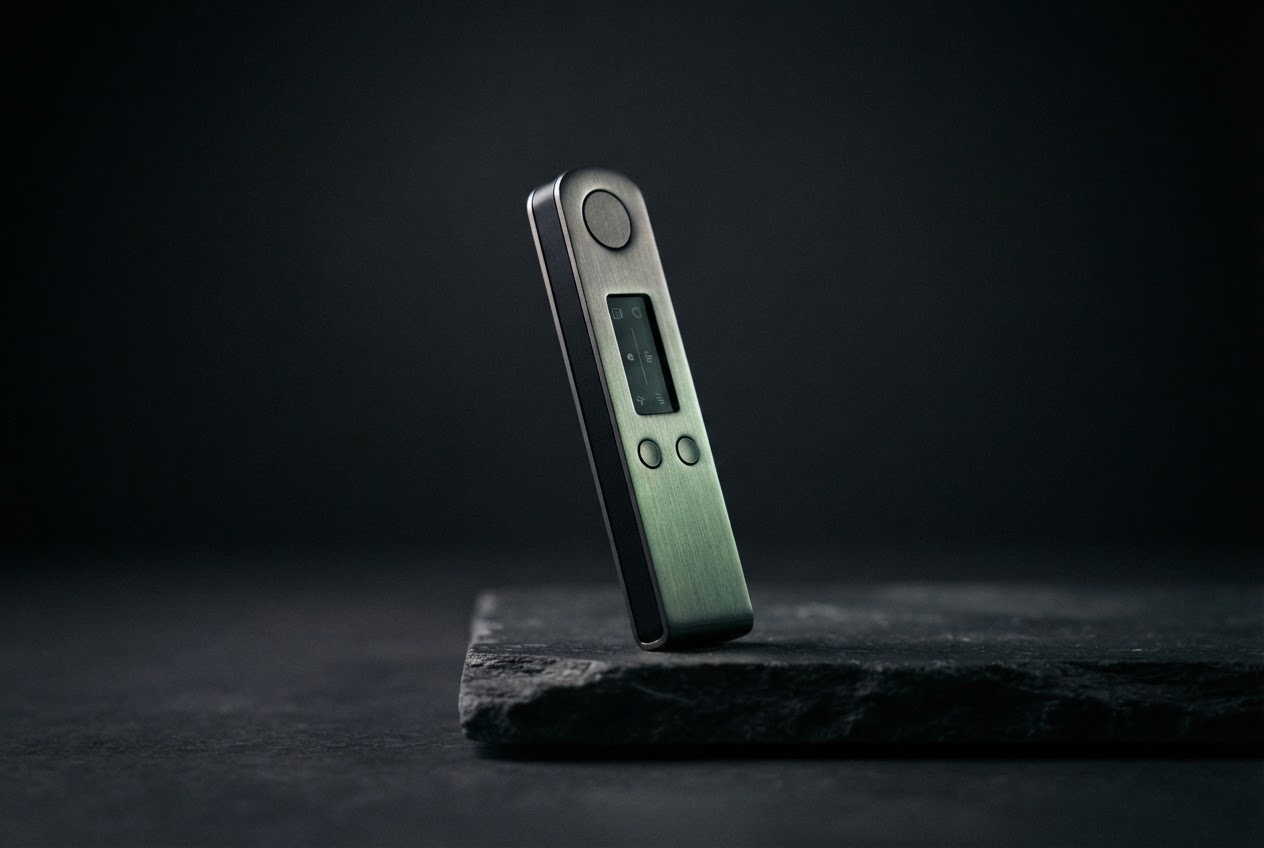
A desktop wallet companion is most useful when it makes the essentials easier to see without taking control away from you. Ledger Live brings account information and wallet-management tools together on your computer, while a compatible Ledger signer remains central to approving sensitive actions.
This guide is an independent educational overview, not an official Ledger publication or a substitute for current product documentation. Interfaces and supported features can change, so verify details through trusted, official sources before acting.
The Desktop Starting Point
Think of Ledger Live Desktop as a workspace for viewing and organizing supported crypto accounts. It can display balances, present transaction activity, and help you manage account connections. It does not turn a computer into a hardware wallet: your device provides a separate place to review and approve transactions.
That distinction is useful from the outset. The desktop app is a window onto account information; the hardware device is where you should carefully confirm the details of an action when prompted. Keep those roles clear and the rest of the experience becomes easier to reason about.
“The screen helps you understand the activity. Your device helps you decide whether to authorize it.
A PRINCIPLE TO KEEP CLOSE
What to Prepare
Start with a computer that you control and keep reasonably up to date, a compatible hardware wallet, its cable or supported connection method, and a stable internet connection. Give yourself enough time to read prompts rather than trying to finish setup in a rush.
If you already use a wallet, make sure you understand how its recovery phrase was created and stored. Never type that phrase into a desktop app, a website, a chat, or a search box to “sync” an account. A recovery phrase is not a routine setup code; anyone who obtains it may be able to access the associated assets. Legitimate troubleshooting should never require sharing it.
Keep recovery information offline. Follow the device’s own initialization instructions, and store its recovery phrase privately and securely. Do not photograph it or save it in cloud notes.
Understanding the Setup Flow
Setup is best approached as a sequence of deliberate checks, not a race to a populated portfolio. Obtain the desktop software only through a source you have independently verified. Confirm the publisher and instructions, then install the version intended for your operating system.
Open the app and follow its on-screen path to connect or initialize a device. Read each device prompt on the hardware wallet itself. Depending on your situation, you may be setting up a new device, restoring access using the device’s supported recovery process, or connecting a device already in use. These are different paths; do not choose one based on a pop-up or unsolicited support message.
Once the device is recognized, the app may guide you through adding supported accounts. A balance can take time to appear, and an empty view does not by itself mean funds have vanished. Check the selected account, network, and synchronization status before drawing conclusions.
Connecting Your Device
Connect the device using its supported method and unlock it locally when asked. Your computer may request permission to communicate with it; grant only the access that makes sense for the step you are taking. Keep the device in sight and use its own display and controls to review relevant prompts.
For a transaction, compare the recipient and amount shown on the device with what you intended. If something differs, stop. Disconnecting and checking calmly is safer than approving a request simply because the desktop interface looks familiar. Never approve an action you did not initiate.
Exploring the Workspace
Spend a few minutes learning the navigation before making changes. Depending on software version and region, you may encounter portfolio summaries, individual account pages, transaction history, asset-management views, or settings. Read labels in context: a displayed market value is an estimate, not a promise of sale proceeds or a guarantee that a transaction can be completed at that price.
Look for account names and network details, and distinguish app information from device status. Treat notices, banners, and external links with healthy skepticism. A polished interface is not proof that a message or destination is genuine.
Managing Accounts
Accounts help organize activity by asset and network. Add only the accounts you need, and choose names that make sense to you without exposing private information on a shared screen. Review activity by opening the relevant account and checking the transaction details available there.
Before sending assets, verify the destination through a trusted channel and confirm that the asset and network are compatible. Address formats can look similar, and an incorrect network choice may be difficult or impossible to reverse. Consider a small test transfer when appropriate, while remembering it does not remove the need to verify every detail.
Security as a Daily Habit
Security is a set of repeated choices. Protect your computer with a passcode and current security updates. Lock your hardware wallet when it is not in use, keep its recovery phrase private, and avoid connecting it on a device you do not trust. Separate routine account viewing from the higher-stakes moment of approving a transaction.
Be wary of urgent messages claiming an account must be “validated,” “synchronized,” or “unlocked.” Do not follow support links from unsolicited messages. Navigate to support resources yourself using a trusted bookmark or verified publisher destination.
Never share your recovery phrase. A support agent, app prompt, or web page asking for it should be treated as a serious warning sign.
Updates and Maintenance
Software and device updates can include compatibility changes or security improvements. Read release information and use the product’s verified update path rather than an attachment or unfamiliar download link. Before updating, ensure the device is charged or connected as instructed and that you have access to your recovery information offline—without entering it into the computer.
Occasional account refreshes or resynchronization may be part of normal maintenance. If something appears out of date, consult current documentation before removing accounts or changing device settings. Keep a simple record of what you changed, not a copy of secrets.
Mistakes Worth Avoiding
The most avoidable problems tend to come from haste: installing software from a search-ad lookalike, approving a device prompt without reading it, confusing a network, or treating an estimated balance as a completed transaction. Another common mistake is assuming that an app’s account list is itself a backup. Account visibility and recovery access are not the same thing.
Pause when a request feels unusually urgent or asks you to move assets to “protect” them. Confirm the request independently, read the device screen, and do not let a stranger direct a recovery process.
Questions Beginners Ask
Can I use the desktop app without connecting a device?
Some account information or features may be viewable without an active connection, depending on setup. Sensitive operations still require the appropriate device checks and approval.
Why is an account or balance missing?
Check that you are viewing the expected account and network, and allow synchronization to complete. For recovery or account discovery, use verified product documentation rather than entering your recovery phrase into a computer.
Is the displayed portfolio value exact?
It is an informational estimate that can move with market pricing and data availability. It should not be read as a guaranteed execution price.
Where should I get help?
Use support information reached independently through the verified product source. Do not disclose recovery words to anyone claiming to provide assistance.
Final Takeaway
Ledger Live Desktop can make account information easier to explore when you understand what the app does—and what it does not do. Prepare carefully, connect through a source you have verified, and let the device’s own screen guide your approval decisions. Small, patient checks are more valuable than a hurried setup.
Most importantly, keep recovery information private and trust only instructions you have independently confirmed. That steady approach gives beginners a clearer starting point, while leaving room to learn each feature at a sensible pace.